Fixture congestion in 2026: what the staff can actually control

At the International Sports Convention in London on 26 March 2026, the players' union FIFPRO put the calendar back at the centre of the performance conversation. Data from its Player Workload Monitoring platform showed that several Premier League players, including Declan Rice, Virgil van Dijk and Morgan Rogers, had already passed 50 appearances in the 2025/26 season, with a season that runs into July and, for many, a World Cup straight after. The union repeated its call for properly enforced minimum four-week summer breaks followed by a real pre-season.
Most coaching staff will never sit in the room where a fixture list is drawn up. But congestion is not only an elite men's football problem, and the question for everyone else is practical: when the schedule is fixed, what is still in your hands?
What the workload numbers show
FIFPRO's 2024/25 workload report, published in September 2025, tracked 1,500 men's players and compared their rest against recommendations from 70 medical and performance experts: 28 days of off-season and 28 days of pre-season. Only 14% of Euro 2024 participants got the full 28 days off, and only 15% had a sufficient pre-season. One player, Min-jae Kim, went through a 73-day run of back-to-back matches with a game every 3.6 days on average. Recovery after international windows was often under 48 hours.
The comparison with other professional leagues is uncomfortable. The same report notes that NBA and AFL players get around 14 weeks off between seasons. Football has no equivalent guaranteed minimum.
What short recovery does to injury risk
The best-known data come from the UEFA Champions League injury study. Following 27 teams over 11 seasons, Bengtsson and colleagues found that league matches played with four or fewer days of recovery had higher injury rates than matches with six or more days: a relative risk of 1.09 for all injuries and 1.32 for muscle injuries, driven mainly by hamstring and quadriceps strains. Team performance, interestingly, showed little or no association with match load.
A 2022 systematic review in Sports Medicine pooled eight studies on professional men's football. Its conclusion was nuanced: injury risk is, overall, higher during congested periods, but the layoff from those injuries tends to be shorter. Congestion seems to produce more injuries, many of them muscular and moderate, rather than more catastrophic ones.
The calendar is decided above your head. What happens inside each week is still yours.
The levers that remain with the staff
If the fixture list is fixed, the remaining variables are who plays, how much they train between games, and how quickly the staff notices that someone is not coping. In practice that means:
- Mark every fixture with four or fewer days of recovery as soon as the schedule is published. That is the definition most of the research uses, and it turns a vague sense of a busy month into a list of specific pinch points.
- Rotate on individual exposure, not on the squad average. Minutes, high-speed running and session RPE accumulate per player, and the regular starters are the ones whose recovery windows really shrink.
- Treat the days after travel and international breaks as recovery days by default, since that is where FIFPRO found the shortest turnarounds.
- Use the cheap daily signals. A morning check-in on sleep, soreness and mood takes seconds and changes faster than any fitness test.
- Protect the breaks you do control: the winter pause, the days after a run of games, and the start of pre-season.
Beyond professional football
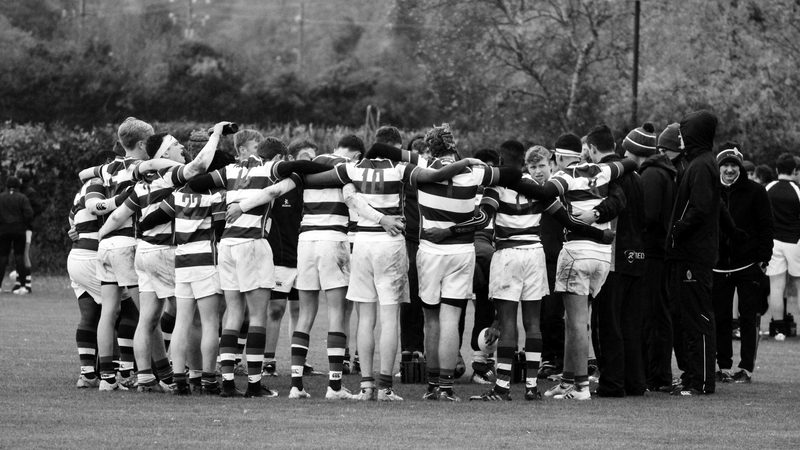
Basketball and handball teams playing midweek and weekend games, rugby squads in tournament blocks and academy players turning out for two age groups all live with the same maths. Most of the research comes from professional men's football, so treat its thresholds as working assumptions rather than laws. The underlying logic carries over, though: fewer recovery days per match means more muscle injuries, and the risk concentrates on the players who play most.
For semi-professional and amateur clubs, congestion often looks different: training after a full working day, a cup tie on a Wednesday, a travel-heavy away fixture. The tools are the same. Know where the short turnarounds are, know which players are carrying the load, and listen early when they tell you they are not recovering.
In SquadStats, the team calendar sits alongside each player's sRPE load, ACWR, monotony and strain, and the daily wellness check-in raises an alert when a player drops below their own baseline. Congested weeks then show up player by player, before the squad for the next match is picked.
Sources
- FIFPRO: Player workload in sharp focus at International Sports Convention in London (March 2026)
- FIFPRO: New player workload report outlines continuing threats to player health and performance (September 2025)
- Bengtsson H, Ekstrand J, Hägglund M. Muscle injury rates in professional football increase with fixture congestion. British Journal of Sports Medicine, 2013
- Page RM et al. The Effects of Fixture Congestion on Injury in Professional Male Soccer: A Systematic Review. Sports Medicine, published online 2022